

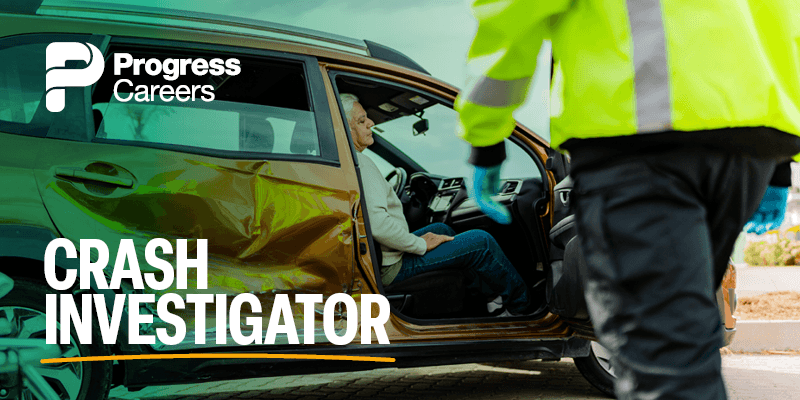
Crash Investigator
This month plays host to ‘Road Safety Week’, a time to reflect on how vital road safety is and what happens when it isn’t followed. If you’ve ever wondered who pieces together the story behind a crash, this month’s career is for you: Crash Investigator! Drive full speed into a career where every detail matters. Crash Investigators uncover the causes behind road traffic accidents, working to improve safety, support justice, and prevent future tragedies.
Ready to decode the scene and steer road safety in the right direction?
Job Description
Salary (Avg.): £32,000
As a Crash Investigator, also known as Forensic Collision Investigators, you’ll usually work as a specialist police officer or civilian employed by police forces. Your role is to examine the scene of a collision in meticulous detail, gathering evidence that explains how and why it happened. This role isn’t for the faint of heart, you’ll have to attend crash sites – sometimes in difficult or distressing circumstances – noting down detailed measurements, photographs, and recordings of the scene. Decipher the cause of the crash and, in many cases, present your findings in court.
It’s a career where no two incidents are the same, and the work you do can have a direct impact on road safety and justice.
Qualifications and Skills
To pursue this career, you’ll typically need GCSEs in English, maths, and science, and A-levels in subjects such as maths or physics. Gaining additional qualifications in forensic science or engineering can help remove any speedbumps along the way.
Then you’ll typically train as a police officer. After your initial police training, you would specialise through a Forensic Collision Investigation qualification accredited by the College of Policing.
Alternatively, some universities, including De Montfort University, offer specialist degrees in Forensic Road Collision Investigation, which can support entry into police or private sector roles.
What you can be doing now
If you’re interested in becoming a Crash Investigator, start by strengthening your foundation in science and maths. Physics will help you understand motion, speed, and impact – all essential for collision reconstruction.
Gaining experience with technology is also valuable. Practising with CAD or 3D modelling software can give you an edge, as these are often used to recreate accidents. You may be able to build this skill through design technology at school.
You could also build your skills and knowledge by volunteering with local road safety charities or attending Road Safety Week events to see how communities are working to reduce accidents.
Impact lives, uncover the truth, and steer the road to safety – a career as a Crash Investigator puts you in the driver’s seat of change!


