

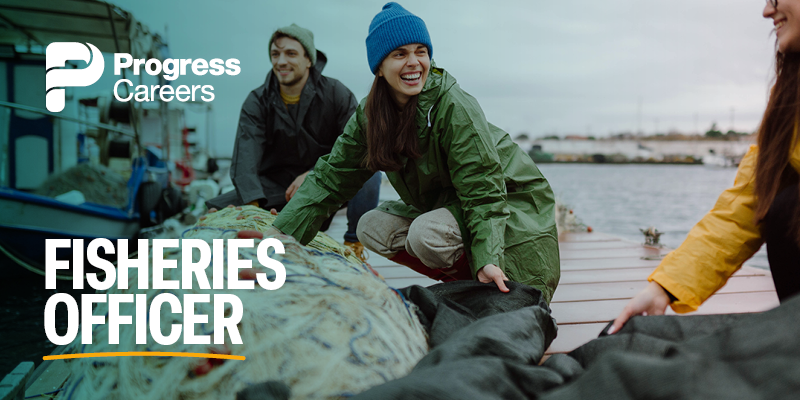
Fisheries Officer
July marks ‘National Marine Week’, a week dedicated to raising awareness about marine protection, with a bunch of activities to get involved in across the UK. So, we’re taking a deep dive into a career as a Fisheries Officer. In this role, you’ll play an important part in protecting aquatic environments and making sure fish populations stay healthy for the future.
Ready to cast your future in a new direction?
Job Description
Salary (Avg.) £31,000
On average you’ll earn around £31,000 per year, with salaries rising to around £38,000 as you gain experience. In this role, you could be testing water quality, monitoring fish populations, investigating pollution incidents or carrying out surveys on rivers, lakes and coastal areas. You’ll also work with local communities, anglers and businesses to encourage sustainable fishing and help protect marine and freshwater environments.
One day you might be out on a boat inspecting fishing activity at sea, while the next you could be responding to an environmental incident affecting local wildlife. It’s a hands-on role that combines outdoor work with problem-solving and conservation, making it ideal for anyone who doesn’t want to spend every day behind a desk.
Qualifications and Skills
Most Fisheries Officers have a degree, especially in subjects like marine biology, environmental science, fisheries management or oceanography. However, there are still ways into the career without going to university, particularly if you gain relevant practical experience through work on fish farms or roles such as a water bailiff.
You’ll need a real interest in the environment and aquatic life, alongside good communication skills and the ability to stay calm when dealing with incidents or members of the public. Being practical and confident working outdoors is important too, as the role can involve working in all weather conditions. A driving licence is often useful, and experience on or around water can definitely give you an advantage.
What you can be doing now
If this career has reeled you in, there are lots of ways you can start building experience now. Spending time outdoors, learning more about environmental issues and getting involved in activities like fishing, conservation projects or water sports can all help you develop useful knowledge and skills.
You could also look for volunteering opportunities linked to wildlife or conservation, or simply start exploring how human activity affects rivers, lakes and oceans. Building confidence in teamwork, communication and problem-solving will also help prepare you for a career like this.
Ready to dive into a career that makes waves? Get hooked on a future as a Fisheries Officer.


